The Roofing Jargon Buster: Understand Your Quote Like a Professional
Getting a quote for roof repairs or a full replacement can sometimes feel like reading a foreign language. With terms like "battens," "flashing," and "soffits," it’s easy to get lost and feel unsure if you're comparing different quotes on a like for like basis.
At Manchester Roofing Repairs, we believe in transparency. We want our customers, whether you’re in Altrincham, Rochdale, or Chorlton, to feel confident and informed. This "Jargon Buster" will help you understand the key terms you'll see in your roofing quotes and why they matter to your home.
Key Components To Your Roof
Tiles/Slates:
- What it is: The outermost layer of your roof, providing the primary waterproof barrier. In Manchester, roof tiles will generally be made from concrete, clay, or natural slate.
- Why it matters: Affects aesthetics, durability, and cost. Natural slate is the most expensive but can last over 100 years.
- In your quote: You'll see the type of tile (e.g., "concrete interlocking tiles," "Spanish natural slate") and often the quantity with an overall price or a price per m2.
Underlay (or Felt):
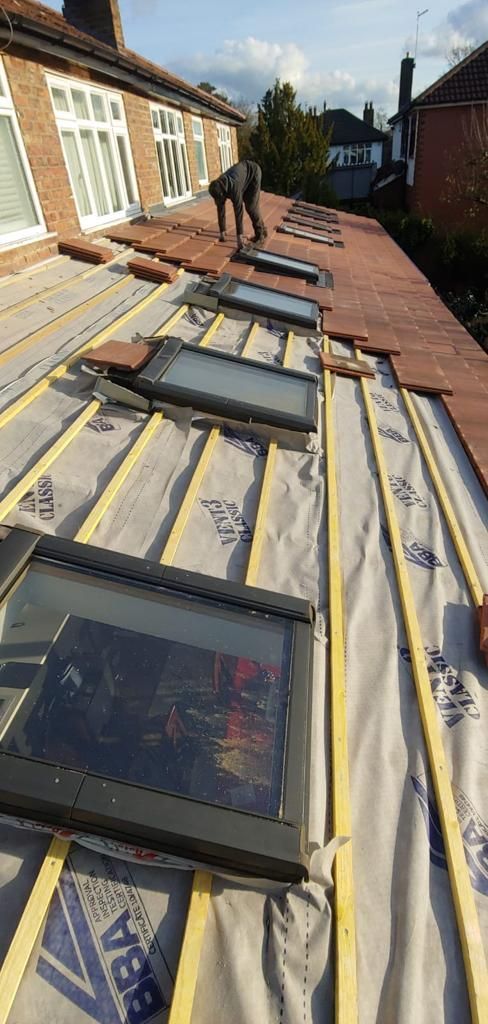
- What it is: A waterproof membrane installed directly beneath the tiles/slates. It provides a secondary barrier against water, wind, and dust, and directs any water that gets past the tiles into the gutters. On flat roofs, felt is often used as the outer most layer
- Why it matters: Essential for modern roofs, protecting your home even if a tile cracks or slips. It's often referred to as "breathable felt" these days, allowing moisture from inside your loft to escape.
- In your quote: Usually listed as "new breathable roofing felt" or "vapour-permeable underlay."
Battens:
- What it is: Horizontal timber strips fixed to the roof rafters, onto which the tiles or slates are nailed or hooked.
- Why it matters: They are the backbone of your roof covering. If they are rotten or incorrectly spaced, your tiles won't be secure.
- In your quote: "Treated timber battens" – ensures they are protected against rot and insect attack.
Rafters:
- What it is: The main structural timbers that run from the ridge (peak) of your roof down to the eaves (the overhang). They form the skeleton of your roof.
- Why it matters: While not always replaced, their condition is crucial. Rotten or damaged rafters require structural repair before a new roof can be installed.
- In your quote: If found damaged during the strip-off, it might appear as an "additional works" item or "timber repairs."
Flashing:
- What it is: Strips of waterproof material (most commonly lead, but also zinc or uPVC) used to seal the joints where the roof meets a vertical surface, such as a chimney, skylight, or an adjoining wall.
- Why it matters: Flashing is a critical weak point for leaks. Well-installed flashing channels water away safely.
- In your quote: "New lead flashing to chimney," "uPVC flashing kit for Velux window"
Ridge Tiles:
- What it is: Special V-shaped or rounded tiles that cap the very top (ridge) of your roof, where the two sloping sides meet.
- Why it matters: They seal the highest point of your roof and are often "bedded" in mortar or mechanically fixed.
- In your quote: "New dry-fix ridge system" (a modern, mortar-free method) or "mortar bedding for ridge tiles."
Verges (or Gable End):
- What it is: The edge of the roof that runs up the side of the house where there isn't a gutter. These edges are often covered with "gable end tiles" or cement mortar.
- Why it matters: Poorly maintained verges can allow water ingress into your gable walls.
- In your quote: "Dry verge system" (plastic caps for a clean, maintenance-free finish) or "re-bedding of verge tiles."
Fascia Boards:
- What it is: The long, straight boards that run along the lower edge of the roof, directly behind the gutters. These are usually made from uPVC but can also be made from timber and aluminium depending o nthe application.
- Why it matters: They support the bottom row of tiles and the guttering. Often visible from the ground.
- In your quote: "New uPVC fascia boards" (low maintenance) or "timber fascia replacement."
Soffit Boards:
- What it is: The horizontal boards that fit underneath the fascia boards, bridging the gap between the house wall and the edge of the roof.
- Why it matters: Crucial for roof ventilation, preventing condensation buildup in the loft.
- In your quote: "Ventilated uPVC soffits" or "soffit repair."
Guttering (Gutters & Downpipes):
- What it is: The system that collects rainwater from the roof and channels it away from the property's foundations.
- Why it matters: Prevents damp, mould, and structural issues.
- In your quote: "New uPVC guttering and downpipes," "cast iron gutter repair."
What Else To Look For In Your Quote?
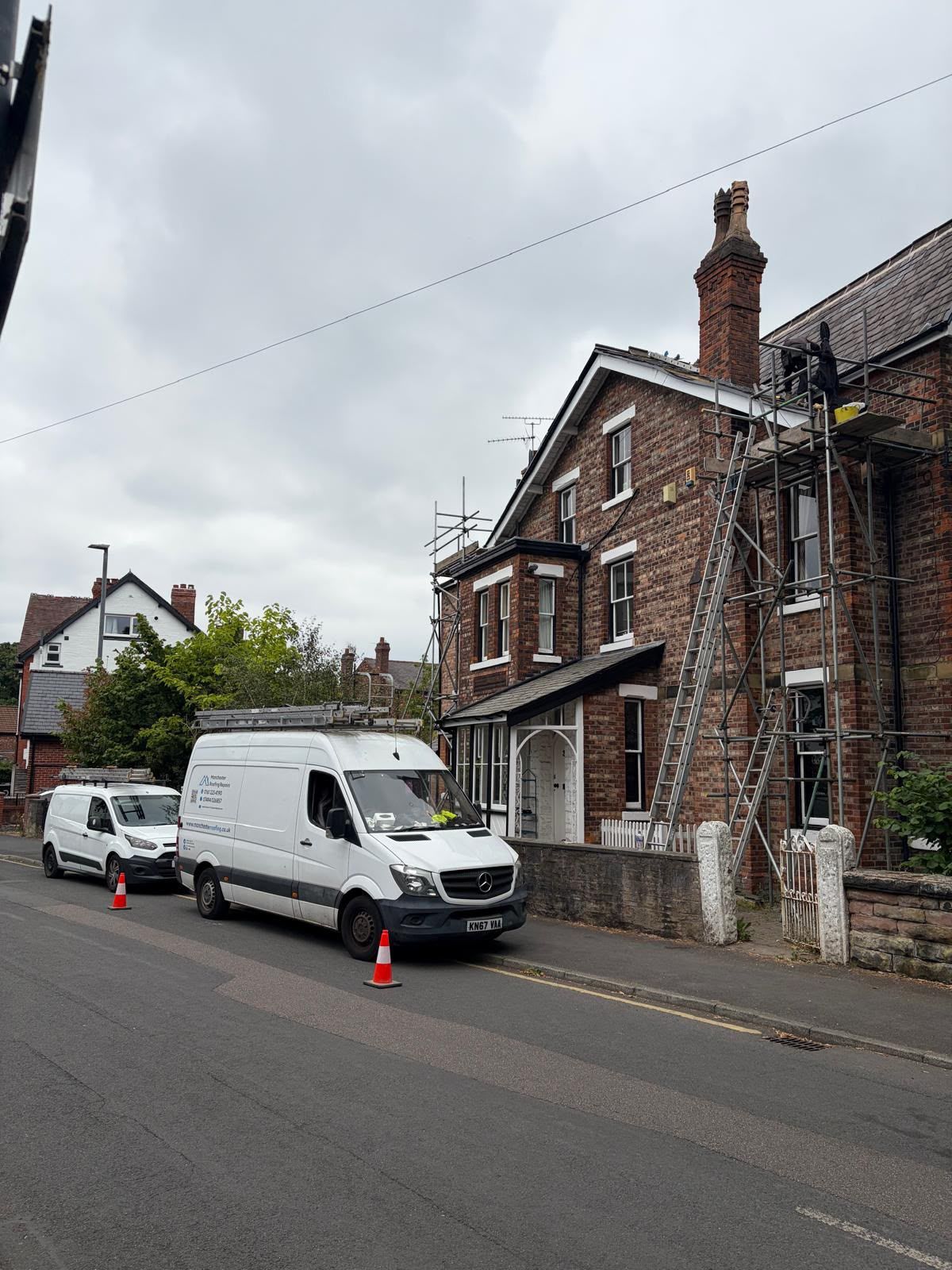
- Scaffolding: An essential safety requirement for any roof work. Ensure it’s included and clearly priced.
- Waste Removal: Removal and disposal of all old roofing materials. This should always be part of a comprehensive quote.
- Warranty/Guarantee: Look for details on the guarantee provided for both materials and workmanship. A reputable Manchester roofer will offer a solid warranty.
- VAT: Confirm whether the quoted price is inclusive or exclusive of VAT.
Feeling more confident about your roofing project in Greater Manchester?
We're happy to talk you through any aspect of our quotes, ensuring you understand every detail. Contact our Manchester Roofing team for a clear, no-obligation assessment of your roof.
You might also like
Roofers Manchester