Beyond the Tile: Why Smart Sensors are the 2026 Standard for Manchester Flat Roofs
If you’ve lived in Greater Manchester long enough, you know the drill. You wake up on a Tuesday in May, and it’s a beautiful spring morning. By lunchtime, you’re looking at a torrential downpour. For years, flat roofs in areas like Didsbury, Salford Quays, and Altrincham have had a bit of a "bad rep" for these sudden changes.
We’ve all heard the horror stories: a tiny pinhole leak goes unnoticed for months, rotting the timber joists until the first sign of trouble is a damp patch on the master bedroom ceiling.
But it’s May 2026, and the "leaky flat roof" is becoming a thing of the past. As a professiona roofing team with over 20 years on the tools, we have seen the industry shift. Today, we aren't just laying high-performance EPDM or GRP; we’re are getting asked regularly about Smart Roof Sensors.
If you’re planning a home extension or a garage conversion this year, here is why smart tech is no longer a luxury—it’s the new Manchester standard.
The 'smoke detector' for your roof
Think of a smart roof sensor as a smoke detector, but for water. Traditionally, flat roof maintenance was "reactive." You waited for a problem, then you paid through the nose to fix the damage.
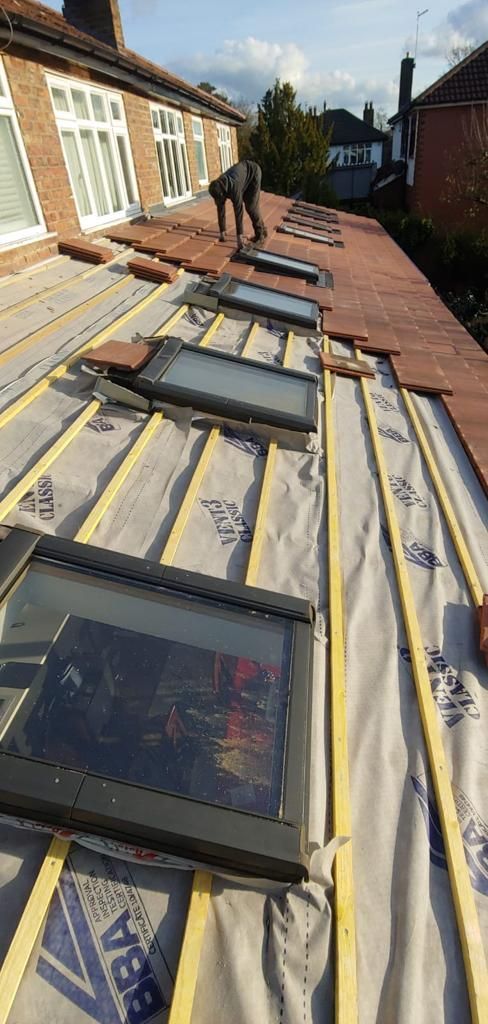
In 2026, wireless, battery-powered sensors (like the Inscio or Tector systems) are embedded directly into the roof's insulation layer during installation.
• What they do: They monitor moisture, humidity, and temperature 24/7.
• How they help: If even a teaspoon of water gets past the top membrane, the sensor detects the change in conductivity and pings an alert directly to your smartphone.
For a homeowner in a high-wind area like The Heatons, where driving rain can find the smallest weakness in a flashing, this "early warning system" can save you roughly 95% in repair costs by catching a leak before it touches your internal plasterboard.
Why Manchester Homeowners Are Making The Switch This May
1. The "Future Homes Standard" & Planning
As of 2026, Manchester City Council has tightened up building regulation approvals. To meet the latest energy efficiency standards, new flat roofs are being packed with thicker, high-tech vacuum insulation. The problem? If that expensive insulation gets wet, it loses its "R-value" (insulating power) almost instantly. Smart sensors ensure your "zero-carbon ready" home stays that way.
2. Protecting the Solar Investment
In May 2026, almost every flat roof extension we build in Sale or Chorlton is being fitted with solar panels. While solar is great for your bills, it adds "penetrations" and weight to the roof. A smart sensor gives you peace of mind that the brackets and cabling haven't compromised the seal, monitoring the areas you can no longer see underneath the solar racking.
3. Insurance and "Insurability"
The insurance market in 2026 is tough. With the increase in "extreme weather events" we’ve seen across the UK, some insurers are offering up to 50% lower excess costs if the property is equipped with active leak detection. It’s a "risk score" game—if you can prove your roof is monitored, you’re a lower risk.
How Much Does A Smart Roof Sensor Cost?
In 2026, the cost of a smart roof sensor depends on whether you are looking for a DIY "smart home" setup or a professional "embedded" system that lives inside your roof structure.
Based on current Manchester market rates and available tech, here is the breakdown:
Embedded Professional Systems:
These are installed under the waterproof membrane during a re-roof or extension.
- Per Sensor: Expect to pay between £150 and £300 per unit.
- The "Hub" or Gateway: Most systems require a central control unit (which connects to your Wi-Fi) costing roughly £100–£200.
- The "Full Kit" Installation: For a standard 20m2 extension, a professional setup (including 2–3 sensors, the hub, and labour) typically adds £500–£850 to your total roofing quote.
Basic Smart Home Sensors (Surface Level):
If you aren't doing a full re-roof and just want peace of mind under a leaky valley or near a skylight, you can use consumer-grade water sensors.
- Mid-Range (e.g., Eve Water Guard, Yale): These cost £40–£90. They often come with a "sensing cable" that can be laid along a flat surface to detect water contact.
- Budget (e.g., Aqara, Zigbee): You can find these for as little as £20–£30, but they usually require a separate smart home hub (like Amazon Alexa or a dedicated Zigbee hub) to send alerts to your phone.
| System Type | Typical Hardware Cost | Best For | Pros/Cons |
|---|---|---|---|
| Embedded (Pro) | £500+ (Full Kit) | New extensions & re-roofs | Pro: Hidden, 24/7 internal monitoring. Con: High upfront cost. |
| Gutter/Moisture | £120–£350 | Snow/Ice melting or drainage | Pro: Prevents structural weight issues. Con: Specific to drainage. |
| Smart Consumer | £20–£80 | Lofts & utility rooms | Pro: Cheap, easy DIY. Con: Can’t see "inside" the roof layers. |
Why the Price Varies in Manchester
In the North West, you’ll find that installation costs for these systems can fluctuate based on the roofing material.
GRP (Fibreglass) Roofs: Easiest to install sensors in, as the resin doesn't interfere with wireless signals.
Metal Roofs: These roofs can block signals. You’ll often need more expensive wired sensors or "signal boosters," which can add £150+ to the electrical side of the job.
Keep in Mind: Whilst £800 may seem steep for "a few sensors," the cost of replacing a rotted structural timber deck in a Manchester terrace is easily £4,000+ in 2026. Think of a system of sensors as an insurance policy, not just a gadget.
Is A Smart Roof Worth The Extra Cost?
If we site down with a client to look at a quote, the question is always: "Is it worth the extra few hundred quid?"
Let’s look at the 2026 numbers. A standard repair for a rotted flat roof deck can easily run into the £3,000–£5,000 range once you factor in scaffolding, new timber, and internal re-plastering. A smart sensor system usually adds less than 10% to the total cost of a new roof.
In an economy where inflation is still hovering around 2.7% and material costs are volatile due to global shipping delays, "preventative" is always cheaper than "corrective."
The Final Verdict...
Whether you’re overlooking the ship canal or tucked away in a leafy cul-de-sac, the Manchester climate doesn't pull any punches. In May 2026, a roof that doesn't talk to your phone is a roof that's already out of date.
If you’re curious about how to integrate these sensors into your roofing system, then give us a call.
For more information and to get your free roofing quote, call
Manchester Roofing Repairs
today!
You might also like
Roofers Manchester