Dry-Verge Upgrades vs. Wet Mortar: Modernising Your Manchester Gable Ends This Summer
The TLDR Summary:
Rapid August temperature swings—from 30°C+ heatwaves to sudden downpours—cause traditional sand-and-cement roof mortar to crack and degrade. In 2026, Manchester homeowners are upgrading to BS 8612-compliant dry-verge systems, which mechanically lock edge tiles in place for a weather-proof, maintenance-free finish.
If you take a drive through residential areas like Altrincham, Bramhall, or Didsbury this August, look up at the edges of the rooflines—specifically the gable ends where the tiles meet the side wall (known in the trade as the roof verge).
On older properties, you'll likely spot crumbling grey sand-and-cement mortar, missing chunks, or unsightly dark water streaks running down the brickwork.
After the extreme heat spikes we experienced earlier this summer, followed by heavy August thunderstorms, traditional mortar on Manchester roofs is reaching its limit. If you’ve noticed mortar flakes on your driveway or lawn, you’re looking at a roof verge that is no longer doing its job.
Here is why upgrading from traditional "wet mortar" to a modern Dry-Verge System is one of the smartest, high-value improvements you can make to your property before autumn arrives.
The Problem with Wet Mortar in the 2026 Climate
For decades, standard British roofing relied on sand-and-cement mortar to seal the outer edge of pitched roofs. While cheap to lay initially, wet mortar has a major weakness: it isn't flexible.
1. Thermal Shock and Expansion
In August, roof tiles absorb solar radiation, expanding during the day and contracting rapidly during sudden evening downpours. Mortar cannot stretch with this movement. Over time, hair-line cracks form, allowing moisture to penetrate.
2. Frost and Wind Damage
Once water gets into those tiny cracks, winter freezing splits the mortar wide open. Loose mortar along a gable end leaves your edge tiles completely unanchored. In a strong gust of wind, an unanchored verge tile acts like a sail, threatening to rip away and damage your property or vehicles below.
3. Building Regulations Have Shifted
Under updated
BS 5534 and
BS 8612 standards, relying solely on mortar to hold ridge or verge tiles is no longer recognized as an adequate single fixing method for UK roofs. Mortar degrades; mechanical fixings don't.
What is a Modern Dry-Verge System?
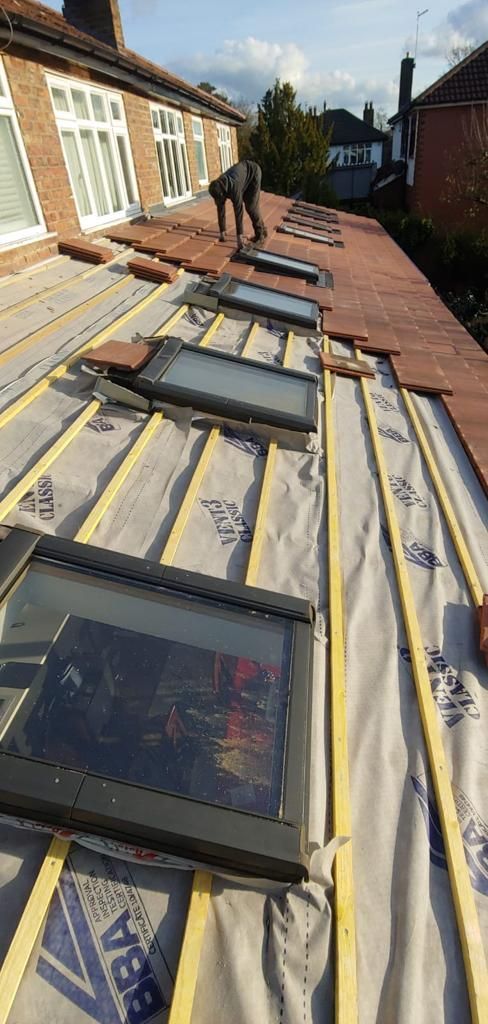
A Dry-Verge System replaces crumbling mortar entirely with high-grade, UV-stabilized polypropylene units that clip directly onto your roof battens.
Instead of slapping wet cement along your roofline, we fit heavy-duty batten end clips and interlock engineered capping units along the entire slope.
Here is why this tech is dominating Manchester roofing upgrades this summer:
- Built-in Water-Shedding Channels: Older dry-verge systems sometimes caused black water streaks down brickwork. Modern BS 8612-compliant units feature integrated drainage rails that throw rainwater clear of your gable walls, keeping your brickwork clean.
- 100% Maintenance-Free: Polypropylene won't rot, crack, or wash away. Once fitted, you’ll never need to scaffold your property to "repoint" your verges again.
- Vermin and Pest Protection: Interlocking verge units completely cap the gap between the tile and bargeboard, blocking birds, wasps, and squirrels from nesting in your loft space.
- Sharp, Modern Aesthetics: Available in grey, terracotta, black, and brown, dry-verge units give older properties a clean, contemporary finish that instantly boosts curb appeal.
August Comparison: Wet Mortar vs. Dry-Verge Upgrade
| Feature | Traditional Wet Mortar | BS 8612 Dry-Verge System |
|---|---|---|
| Fixing Method | Sand & cement adhesive | Mechanical batten clip & interlock |
| Lifespan | 5 – 10 years (Requires repointing) | 30+ Years (Maintenance-free) |
| Weather Resistance | Prone to frost cracking & wind blow-off | Engineered for high-wind resistance |
| Appearance | Discolors, crumbles, uneven finish | Sleek, uniform, contemporary lines |
| Typical Cost (Semi-Detached) | £350 – £600 (Short-term patch) | £650 – £1,100 (Permanent asset) |
Why August is the Prime Window for Installation
Upgrading your verges in August makes practical sense for two key reasons:
- Dry Timber Decking: Installing dry-verge batten end clips requires dry, structurally sound batten ends. August offers the ideal conditions to inspect, treat, or extend timber battens without moisture trapped inside the structure.
- Beating the September Rush: Once autumn gales hit in September and October, scaffolding availability drops and emergency callout rates rise. Fixing your gable ends now secures lower summer rates and faster job completion times.
Protect Your Gable Ends Today
Don't wait for an autumn storm to blow loose verge tiles off your roof. Upgrading your gable ends from decaying wet mortar to a sleek, mechanically fixed dry-verge system protects your structural timbers, eliminates future repointing costs, and keeps your home looking sharp.
At Manchester Roofing Repairs we install fully certified, BS 8612-compliant dry-verge systems across Greater Manchester.
Is your roof mortar starting to crumble? Contact our team today to book your free August roofline assessment.
You might also like
Roofers Manchester